NEWS
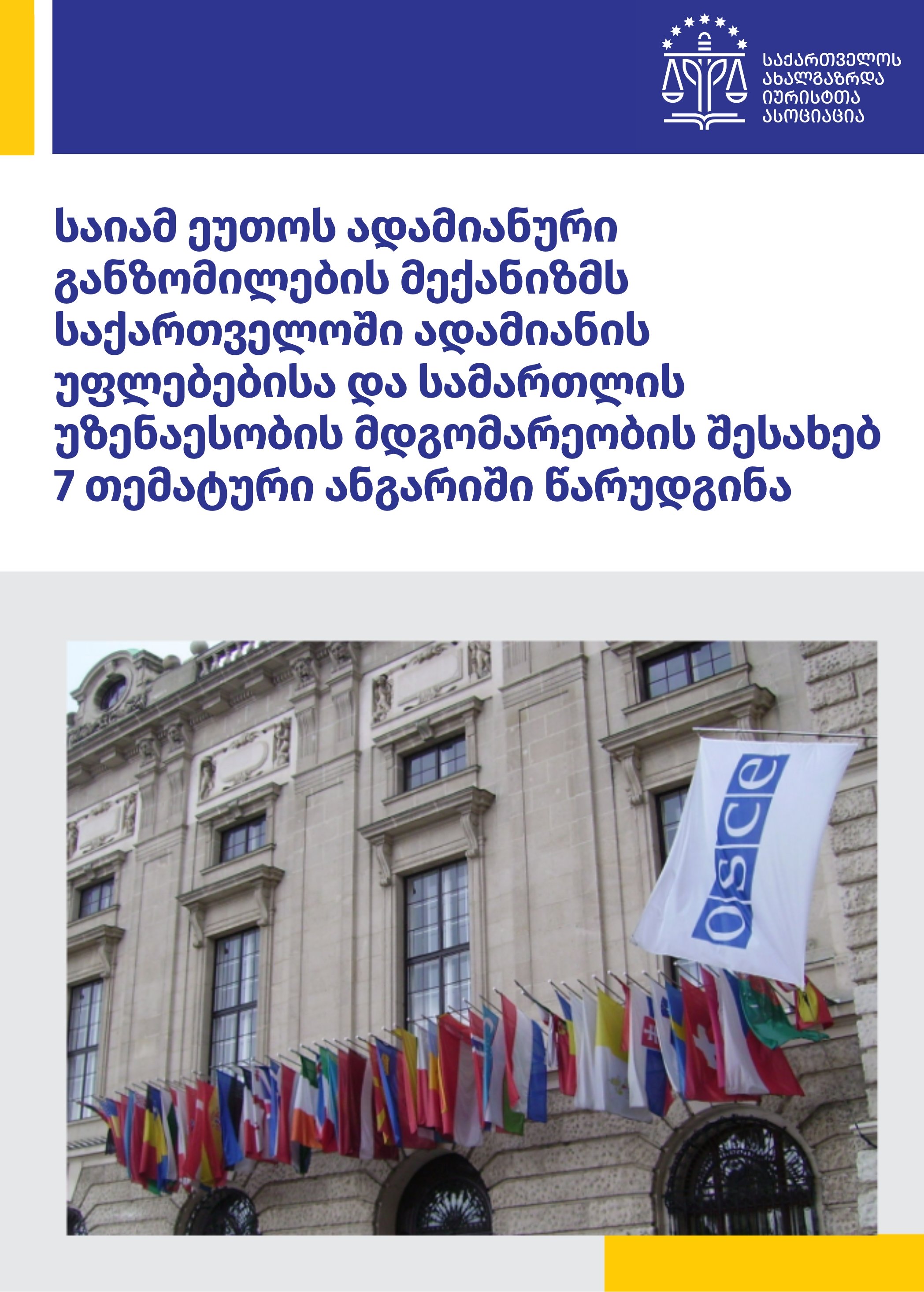
On 29 January 2025, 23 OSCE participating States activated the Human Dimension Mechanism (“Moscow Mechanism”) with respect to Georgia. This process involves a fact-finding mission by independent experts to examine the situation of democracy and human rights in Georgia—specifically the events that have unfolded since spring 2024—and to prepare a report and recommendations to be submitted to the OSCE Permanent Council. The activation of the Moscow Mechanism indicates the particular gravity of the human rights situation in the country and the concern of the international community. It is noteworthy that 38 OSCE participating States also activated the Vienna Mechanism in December 2024 regarding alarming human rights violations in Georgia. The Vienna Mechanism typically precedes the Moscow Mechanism and allows participating States to ask questions of one another. The questions posed to Georgia concerned the effectiveness of investigations into rights violations related to protests and the steps taken to prevent similar cases.
GYLA submitted information on developments in Georgia since spring 2024 within the framework of the Moscow Mechanism, including on the freedoms of assembly, association, and expression; the prohibition of torture; political justice; challenges to the judicial system; and repressive legislation. In total, GYLA submitted seven thematic reports and relevant sources.
The information submitted to the Moscow Mechanism covers the violent crackdown on the spring 2024 protests, cases of ill-treatment and arbitrary detention, as well as the systematic practice of torture and ill-treatment, the culture of impunity, and ineffective investigations documented since November 2024. The communication also draws attention to the disproportionate and dangerous practice of mixing chemicals in water cannons and the need for an objective investigation into this.
The communication further analyses the repressive legislation adopted since 2024, including restrictions on freedom of expression, tightened media regulation, the introduction of new criminal and administrative measures aimed at criminalization, and the use of justice for political purposes.
It also analyses actions taken against civil society in Georgia, including legislative changes and their destructive impact on freedom of association and participation in public life. It is emphasized that the currently initiated legislative amendments lead to the de facto criminalization of civil activity and are aimed at the dismantling of civil society.
The information submitted by GYLA includes seven short thematic documents based on the organization’s research and assessments, reports of international organizations, and publicly available information. Each document contains a list of relevant publications issued by GYLA.
The documents can be found at the links:
SHARE: